
Building a Software Career from Kathmandu
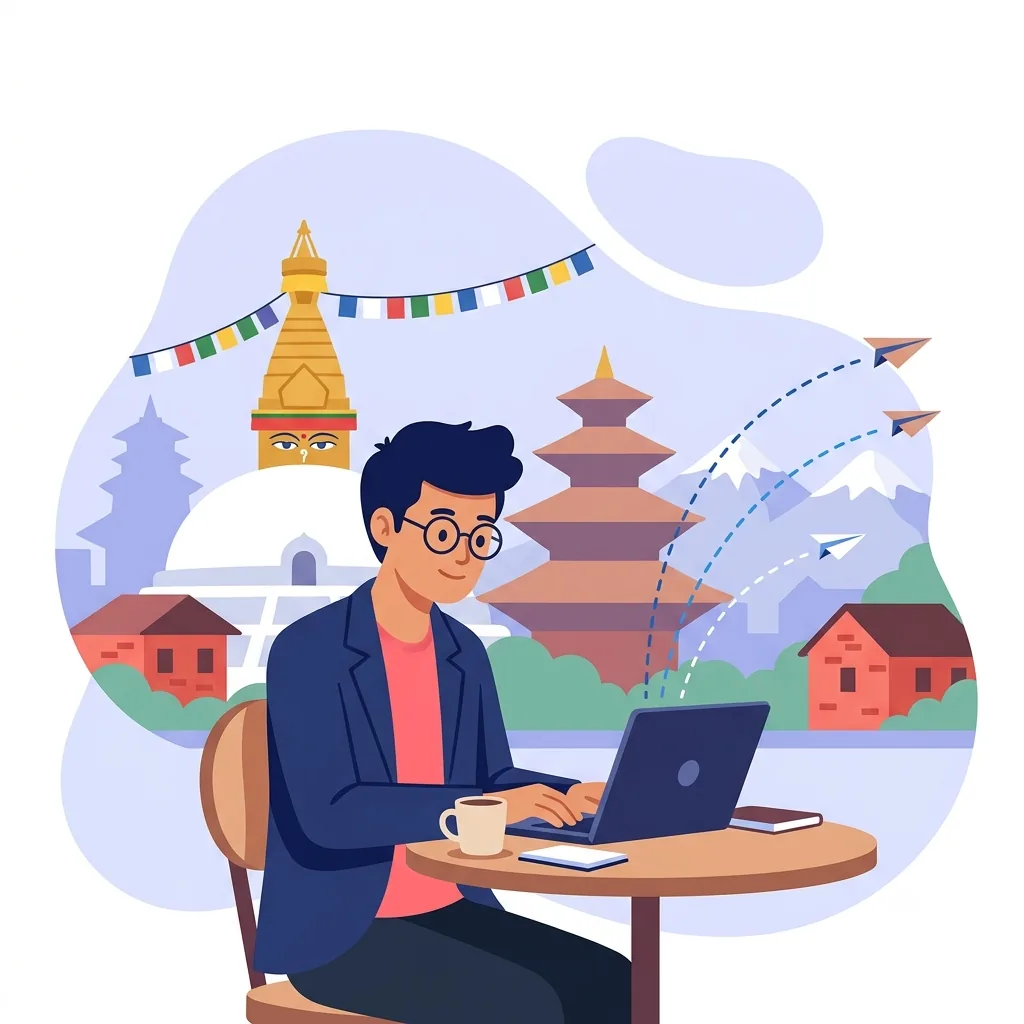
I started as an intern in Kathmandu in 2014, and I've built my entire career — intern to team lead — without leaving it. Every year since, at least one batchmate, colleague or relative has asked me some version of the same question: why are you still here? It's a fair question. This is my honest answer, including the parts that aren't flattering to either side of it.
What the industry here actually looks like
Nepal's software industry runs mostly on services. The companies that shaped me built products for clients in Australia, the US and Europe — my first employer served Australian clients, which meant our mornings overlapped with their workday and code reviews came back before lunch. Alongside the outsourcing houses there's a real and growing local product scene — payments, fintech, logistics — but services are still the backbone, and that shapes everything: the work you get, the deadlines you keep, and whose standards you're held to.
The other defining feature is size. Kathmandu's tech scene is small enough that reputation travels faster than CVs. The engineer who bailed on a project mid-sprint and the one who quietly rescued a doomed delivery — both stories reach your next interviewer before you do. That cuts both ways, and it kept me honest early.
The hard parts, honestly
The salary gap is real and it doesn't fully close. The same work, the same stack, the same quality bar can pay several times more a few borders away, and pretending otherwise helps nobody. That gap powers the brain drain everyone here knows personally: of the engineers I started with in 2014, a large share are now in Australia, Canada or the US. Losing your best colleagues every few years is a tax the industry pays quietly — every team I've led has had to rebuild senior capacity more than once.
There are structural frustrations too. Fewer deep product companies means fewer chances to work on systems at serious scale — you have to seek those problems out or build them yourself. International payments in and out of Nepal remain more painful than they should be for freelancers. And those of us who started a decade ago remember coding through load-shedding schedules, planning work around power cuts. That era is genuinely over, but it tells you how recently the foundations were shaky.
What a decade changed
Nearly everything material got better. Power is reliable, fiber is cheap and fast, and the coworking-and-coffee infrastructure of a real tech city exists now. The community grew from a handful of meetups into a proper ecosystem of conferences, college clubs and open-source circles. And the biggest shift: after 2020, remote work stopped being exotic. Engineers in Kathmandu now hold remote roles at foreign companies on salaries that were unimaginable here when I started — without joining the queue at the airport.
Geography decides your starting line less than at any point in history. What it still decides is how many people are running next to you.
Why I stayed
Some of it is personal — family, roots, a life I like. But the professional case is stronger than people assume. In a smaller market, responsibility arrives early: I was leading projects and then teams years before I likely would have inside a big company abroad, and that compressed experience compounds. Cost of living gives a decent local salary real weight. And there's a kind of meaning in building capacity where it's scarce — the juniors I've mentored who are now seniors and leads themselves are the part of my career I'd least like to trade.
If you're starting from here
Bet on skills and proof, not credentials — the market that pays best hires from GitHub profiles, shipped products and clear English, not marksheets. Write and communicate well; in services and remote work alike, the engineer who can explain trade-offs to a client is worth two who can only code them. Aim your quality bar at the global market from day one, because thanks to remote work you're in it whether you price yourself that way or not.
And make the stay-or-go decision deliberately instead of by default. Going abroad is a fine choice — half my friends made it and thrived. But staying is also a choice now, not a consolation prize. The honest version of my answer to "why are you still here?" is: because here finally became somewhere you can build a real career — and I'd rather be one of the people who made that true than one who heard about it later.